Search This Blog

Sunday, October 2, 2011

Celebrating Seven Years

Seven years ago today, we married among family and friends in our church in Atlanta.  Yesterday, we sat together in the white table cloth, candle lit dining room of the Stadshotell in Trosa, Sweden and celebrated the wonderful life we have shared together. We have been blessed and have much to be thankful for.  Trosa could not have been a more charming setting for our celebration.

Tre Små Rum, where we stayed
Trosa, a former fishing village turned trendy upscale tourist magnet, an hour drive from Stockholm, was unknown to us when we began to  discuss where to celebrate our anniversary.  However, as our social circle expands, ideas and travel adventure stories are shared with fellow Americans who have long called Sweden home.  Trosa was suggested by one of Helen's friends from the American Women’s Club.
 
So we packed our bags, bought bus tickets and began our adventure to the truly charming and alluring town of Trosa. Trosa’s early history dates back to the 14th century with its official founding noted in 1610.  A great deal of Trosa’s early charm was rendered to ashes when the Russians sacked and burned the city to the ground a century after its founding.  Spared, however, was the Trosa Town Church whose darkened wood steeple still stands today.

The Baltic fish trade that thrived into the late 19th century no doubt gave rise to the contours of the city with its narrow winding streets and ubiquitous collection of painted red homes. Red paint, originally made from water, rye flour, linseed oil and the residue from the copper mines, has been a traditional Swedish color for cottages and barns.  The ingredients preserved wood in the harsh Swedish climate and had the additional characteristic of being cheap.  Mixed among the red homes were others painted yellow; the traditional color of the wealthy elite.  All this color coding raised a moot point, however, since Trosa is considered among the wealthiest cities in Sweden.  Clearly the switch from fishing to tourism was a wise and profitable choice.

Library and Tourist Center
Our tour of this tiny burg was based on the Heritage Trail map we obtained from the tourist office in the town library (with another saved tower on top). 
The Brewery Bridge
Following the map, we traipsed over the old brewery bridge (bryggarebron) that was once owned and operated by a brewery that produced beer and soft drinks until 1902.  We visited the town church that had been spared from Russian wrath and walked the now peaceful green graveyard grounds.  
Anton's Krog (Restaurant)
Across the Villa Bridge (Villabron) and down a wonderful tree-lined lane, we found Anton’s Krog. Now a most popular restaurant, the building was once the police and fire station and at some time in its past acquired the steeple top of the old town hall.  
Gröna Torget
We sat for a while in the Green Square (Gröna Torget) made possible by a fire in 1863 and a decision by the town to make a park of the open space in 1900.  We have come to fully appreciate the Swedish predilection to include parks and open space in their city environments. 

Trosa's harbor and boardwalk
We visited the harbor and walked to the end of the long pier. It was clear the harbor no longer catered to the needs of weather beaten fishermen, but more to the needs of gentlemen sailors.  In a world of instant communications and GPS navigation we knew the pier’s end point, called the “The Butter Bucket and World’s End,” didn't hold the same foreboding as it did for sailors generations ago.

The Butter Bucket
After a day of walking, we rested and then headed to the Stadshotell for a wonderful anniversary dinner.  It was the end to a perfect day and the start of another year together.    


Saturday, September 24, 2011

Our 2nd Stockholm Apartment

We were advised prior to our arrival in Stockholm about the difficulties we would encounter finding an apartment.  We can confirm that that advice was pretty accurate.  Helen's focused attention reviewing apartment website entries and quickly responding to potential housing opportunities was the key to us securing an apartment. This path to accommodations was not a straight line.

Prior to leaving the States, Helen made arrangements over the Internet for our first Stockholm apartment.  That apartment, known as a vacation rental, gave us a seven-week home base as the owners, as most Swedes, took an extended summer holiday.  Helen then identified another apartment that was offering a 1 year lease. The apartment ideally suited our needs regarding size, access to public transportation and nearby walking distance to food and other shopping.  The only problem was that there was a nine week gap from the end of our first rental agreement until the opening date of this apartment.

Again, Helen was back reviewing several apartment websites when she spied a weekly rental opportunity in Sodermalm.  Without hesitation, she sent an email expressing our interest. With the guidance and helpful advice of other Americans, she mentioned we had no pets, didn't smoke and that Jay had a work contract, all pluses for a landlord.

We soon met the apartment owner, Adriana, a late twenty-something energetic gal, who indicated that she had received nearly fifty (that's 50) responses to her posting.  Helen's email was the first to arrive.  Adrian was planning to move in with her boyfriend and was looking someone mature take care of her apartment.  Sodermalm has a party, hipster, and in some places bohemian element, and Adrian was glad to see people who more resembled her parents than the pierced, tattooed or dyed red hair folks who occupy Sodermalm's many bars and restaurants.

We are nearing the end of our nine week stay and made a short video of our temporary home.  Enjoy.


Sunday, September 11, 2011

Sept. 11 Commemoration


We commemorated the 10th anniversary of September 11 by gathering with Americans, Swedes and others outside the American ambassador’s back yard in Stockholm. The day had a cold, cloudy and blustery feel. Unfortunately, our reception at the ambassador’s home felt the same way.
Post 9-11 realities have resulted in extensive security measures at airports, transportation hubs and at our American embassy in Stockholm. Those measures include a high chain link fence topped with coils of razor wire greeting visitors, not projecting an inviting “welcome to America” feel, but sending a clear signal to “keep out.” No doubt the measures are warranted and a prudent response in “today’s” world. But seeing the other nearby brick diplomatic buildings still cloaked in ivy and old world European charm it was hard not to feel a sense of loss. 
Our gathering at the ambassador’s residence was organized by the American Club of Sweden. The embassy staff also gathered, but they gathered within the ambassador’s home. 
We and other fellow Americans, however, stood outside on a grassy patch wanting to be included. Inside a color guard raised the colors, songs were sung, speeches made and poems read. We stood in the chilled air in small clusters straining to hear under the very watchful eyes of Swedish police officers who provided extended security outside the ambassador’s home.


Despite the distance between us and those inside, we were grateful to have a venue to remember that horrific day a decade earlier.
A small memorial had been erected on the grassy knoll that was adored with flowers brought by those who choose to gather together that day. Lit candles extended the sense of reverence. As people arrived, they were drawn to the small memorial. All paused and stood silently. We could only wonder of their thoughts and their personal moment of discovery of the events on September 11, 2001.
Jay was in California and received a phone call around 6:00 a.m. with emphatic instructions to “Turn on the TV!” He asked, “What channel?” The answer was a simple; “It doesn’t matter.” Helen was at school and noticed teachers gathering in the lounge about the TV. It was a shocking experience. All teachers at the school were instructed not to say anything to the students, but parents started coming to the school to get their children. Some students did not return the next day for fear of further destruction.


The cluster of people behind the Embassy slowly waned as couples and families turned to resume the daily tempo of life’s activities. We walked back to our apartment where Jay finished his packing before heading to the airport for a trip to Eindhoven in The Netherlands. 
At the airport, Jay followed the now familiar routine of security: lap top out, liquids scanned in their 1 quart bag, metal detector walk, followed by a random physical pat down which is common here. Much has changed in 10 years. Much has been lost in our sense of ease and connectedness. Maybe…maybe someday it will change again to a warmer, more welcoming world.

Sunday, September 4, 2011

Labor Day Comes, Summer Ends

We arrived in late June when summer here in Stockholm was in full swing. We enjoyed strolling through the parks near our apartment, walking along the banks of Riddarfjärden, and enjoying the warm sunshine like everyone else here.

The days are starting to get cooler, and our walk this Sunday morning required a light jacket. It won't be long before coats, hats and gloves will be required. In the meantime, we will continue to enjoy the blue skies and sunny days. Below is our summertime video of Stockholm.

Sunday, August 28, 2011

NASA - A Human Adventure

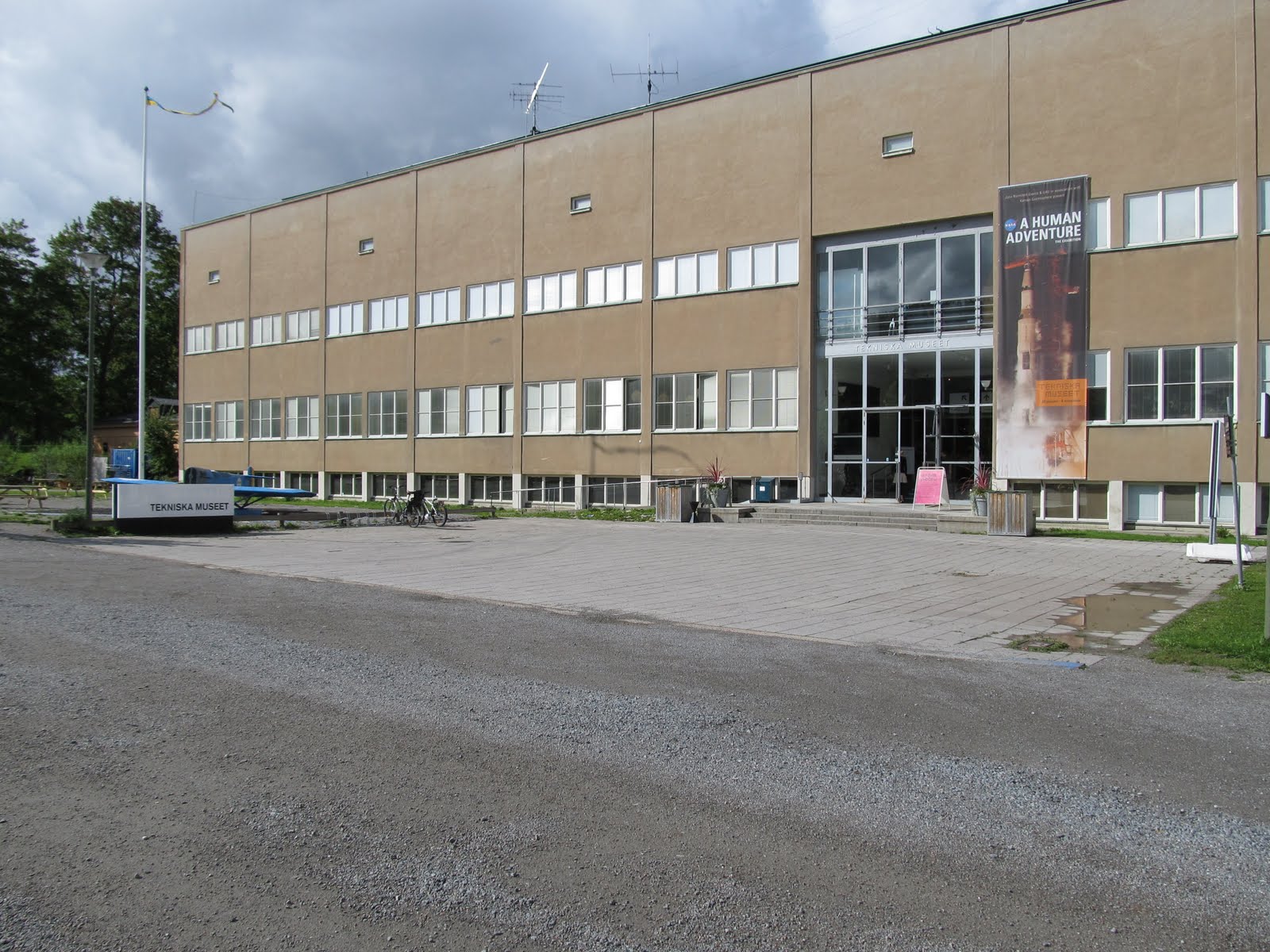
Today we visited the Tekniska Museet to tour the NASA – A Human Adventure exhibit. The exhibit contained over 400 objects ranging from a replica of the Soviet Sputnik to a close up view of a space shuttle command deck showing the great leaps in space exploration achieved in such a short time.

We are space age babies. The “space race” glued our eyes to the TV as Walter Cronkite gave us witness to Mercury, Gemini and Apollo countdowns. We can recount in detail our personal story when Neil Armstrong announced the “Eagle has landed” and took his - and our collective - first step on the moon. It seems so long ago now.

Click to show "John Kennedy" result 4We wondered how Swedes responded to the exhibit. Forever calm and inclined to maintain a balance, can a Swede ever identify with the intense sense of national angst we Americans felt when President Kennedy challenged us to land a man on the moon and return him safely? More importantly, can an American born into an Internet connected, iEverything world ever appreciate the sense of urgency we once felt to achieve a singular goal?

Replica Eagle Lunar Module
This observation had a note of irony as we received instructions on use of the exhibit’s iPod audio tour guide. “Simply move your fingers up and down to select the menu item you want.” On the tour, we selected menu items, listened, adjusted volume, opted to hear augmented narration and viewed supplemental photos on the iPod. As we stood in front of a replica of the Eagle Lunar Module command center, we wondered how anyone ever thought we could fly to the moon using computers with 16Kbits of memory. Truly a human adventure.

The exhibit designers understood the power that imagination played in launching humans into space in what we would now consider haphazard contraptions. Photos of imaginative writers such as H.G. Wells, Jules Verne and others filled an early display area. Also showing was a continuous video loop of Georges Méliès’s 1902 film Trip to the Moon (Le Voyage Dans la Lune).

Méliès’s film gives us not only a glimpse of the yearnings of our early 20th century European ancestors to travel to the moon, but also their sensibilities on exploration. Upon landing, the intrepid travelers’ first response upon encountering the moon’s Selenite population was to dispatch each creature encountered with a club. The Selenites, from a European mindset, had a king who was equally dispatched. The travelers then made their escape with spear-carrying Selenite natives in hot pursuit.

Harder to comprehend is a life that saw the original release of this grainy black and white science fiction film and also lived to see grainy black and white images of a human actually step on the moon. This time, “we came in peace.” Many changes indeed for a single lifetime.

A English narrated version of Le Voyage Dans la Lune.  There may be a brief "commercial" at the start of the film...but this film is a classic and worthy of whatever commercial benefit someone may achieve.


Sunday, August 21, 2011

Riga in a Hurry

Very short video of our tour of Riga.  The town was celebrating its 810th anniversary.  The streets were filled with people, food, street performers and all sorts of activities and sights to see.  In the park, there were several events, including a live performance of New Orleans jazz music.


Saturday, August 20, 2011

A Day in Riga

The M/S Romantica docked at the port in Riga on Saturday at 11 am and the passengers disembarked quickly. Some, like us, were carrying backpacks and were there to sightsee for the day. Others were hauling suitcases, perhaps going home. We had investigated Riga on the internet (www.liveriga.com and www.rigalatvia.net) and been given a briefing of the city onboard the evening before and picked up a map that was quite sufficient for our needs. It highlighted the top 12 tourist attractions and listed 67 houses that were “objects of Art Nouveau.” With map in hand, we headed out.

It was only a 15 minute walk into town, but we were constantly sidetracked on our way to the Tourist Information office by interesting sights and sounds. Riga was celebrating its 810th anniversary the weekend of August 20-21 (yes, it was founded in 1201!), and we were in the middle of music, singing, dancing, beautiful parks, mimes, pony rides, a short parade and many locals who had come out for the occasion.

Here are four highlights of our day! We spent part of a rainy morning at the Latvian Occupation Museum. The museum presents the history of Latvia from 1940-1994, years in which they experienced both Soviet and Nazi German occupation. The exhibition shows agreements, documents, photographs and objects that tell the story of the Latvian population, the tragedy caused by invading foreign powers, the appalling conditions in which they lived and their resistance to the occupying powers. It was a somber experience. It made us so thankful to have been born in the USA.

The sun came out, and we saw St. Peter’s Church, one of the most ancient examples of medieval churches in the Baltic region. It was first built in the 13th century, and a Baroque wooden steeple was installed in 1690 – the highest in the world at that time. It was burned down during WW II and restored in 1973. It houses many lovely pieces of handmade tapestry as well as ancient epitaphs and burial plaques.

Across a canal and housed in four dirigible hangars that were never used for that purpose is Centraltirgus – City Market. Each section of the market houses a different type of commodity. There are fish and other seafood (dried, fresh, frozen, cooked and raw), fresh fruits and vegetables and clothes. I was surprised at how much smoked fish was for sale.

The element of Riga that got me most excited when I first read about it is the fact that it has been designated a World Heritage Site by UNESCO because of the number (around 800) and density (40% of buildings in the center of Riga) of their art nouveau buildings. It is generally recognized that Riga has the finest collection of art nouveau buildings in Europe. Art Nouveau was first expressed in fabrics and graphic design. This style spread on architecture and furniture in the 1890's. Art Nouveau buildings often have asymmetrical shapes, arches and decorative surfaces with curved, plant-like designs. Moreover, art and architecture connoisseurs believe that it is in Riga that art nouveau found especially powerful and sweeping expression.
The Freedom Monument
Michael Jackson Russian dolls

After a day of walking, touring, watching, looking and listening, we were tired and headed back to the ship, happy with all the discoveries we'd made that day.